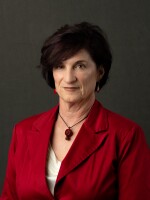
New York Times journalist Simon Romero grew up in New Mexico, but he has covered Latin America for nearly three decades. That included serving as bureau chief in Caracas, Venezuela. He will be Albuquerque Thursday to give a talk at the University of New Mexico about Venezuela after the forced removal of former president Nicolás Maduro by the Trump Administration. He told KUNM there were a variety of reactions by Venezuelans to that military kidnapping.
SIMON_ROMERO: It did come as a shock to people everywhere, including in Venezuela. But, you know, on the ground in Caracas, there was a lot of fatigue, honestly, with the way that Maduro had handled running the country, especially his handling of the economy. So there was just a sense from a lot of people that they were just reaching the end of the line, and they wanted something to change, something to break. So I would describe the mood there is cautiously optimistic. People are awaiting bigger changes. You know, they're remaining really patient with everything, but it's going to really be interesting in the months ahead to see if that patient starts to wear thin.
KUNM: Previously, foreign journalists were not allowed into Venezuela, and on your last day, you were intimidated by the National Police. So what is the evolving situation around freedom of speech and opposition in the country?
ROMERO: I was struck first of all just by the sense of overall safety in the city. It's a much safer place, and this used to be really one of the deadliest cities in Latin America, anywhere in the world, in terms of just violent crime, murders, kidnappings, things like that. So walking around Caracas is a lot safer than it used to be, but that run-in that I had with the Bolivarian National Police on my last full day in the city was a reminder that you really have to be very cautious. Still. They stopped me. They searched me, they threatened to detain me. This is the way that the security forces in Venezuela have operated for a long time. So it was just a good reminder to keep your wits around you, and especially for foreign journalists who are coming to the country at this time.

KUNM: Were there changes happening before the ouster of Maduro?
ROMERO: There were big changes happening within Venezuela just because of Maduro’s really failed economic policies. There was an effort from within his government to expose the economy to more market forces, really just to overhaul the way that the economy is run. And that was already showing some positive effects. And that effort was led by, of all people, Delcy Rodriguez, who was a Maduro ally and loyalist. She was his vice president, and now she is, of course, the person that the Trump administration has chosen to lead Venezuela into the foreseeable future.
KUNM: You were in the capital city, Caracas, and saw some signs of life emerging from a pretty devastated economy, but you had a great quote in your piece. “The city has the wages of Zimbabwe, the public services of Bangladesh and the prices of New York.” That does not sound like a workable economy for most people. How do they get by?
ROMERO: It's an extremely skewed economy. You have a big, big percentage of the population of the workforce that is employed by the public sector in Venezuela, by the government. Inflation is still running at something north of 500% a year. So that means that salaries, by the time people get them at the end of the month, are the equivalent of $2 or $3. So they depend on government handouts of food, free medical services, things like that. And you can still see those structures in place, but they're extremely frayed. That's the reason why there's been such an exodus of people out of Venezuela over the past decade. I was astounded by the prices of things in Caracas. Everything is dollarized. Effectively, it's more than what you would pay in Miami and in some cases, more than what you would pay in New York City. It's just an extremely unbalanced economy. There is still an elite that is doing extremely well, but we're talking about a sliver of the population, so most people are just barely struggling to get by.
KUNM: How have the administration's actions in Venezuela shifted the balance of power in Latin America, particularly around Cuba?
ROMERO: It's been a momentous shift. It really kind of lays bare how Venezuela was this crucial piece of the political puzzle in all of Latin America, partially because of its geographic location. You know, it's right on the northern fringe of South America, and it abuts right into the Caribbean. And also just because of the policies that were in place over the last three decades in Venezuela, it was assisting left wing governments throughout the region. It has been Cuba's top ally, taking the place of the role that the Soviet Union once had in supplying oil to Cuba. So as soon as Maduro was taken out, Venezuela stopped sending oil to Cuba. That's placed Cuba's economy on the precipice of this looming disaster, really. So it's just reshaped regional dynamics in an incredible way, overnight, almost. And it's really been something just incredible to witness.
Simon Romero will talk about his reporting on Thursday at 3 p.m. in the Ortega Hall reading room 335 on the University of New Mexico campus.