Every year, the National Park Service fields applications from artists across the country to spend time – and create – in the nation’s National Parks.
This year, five artists were chosen for the Valles Caldera summer artist-in-residence program, where creatives will spend up to four weeks totally immersed in the area’s surreal volcanic landscape.
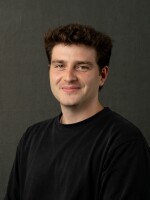
KUNM invited one of those artists, Albuquerque native Julia Andreas, into the studio to learn more about her – and her art.
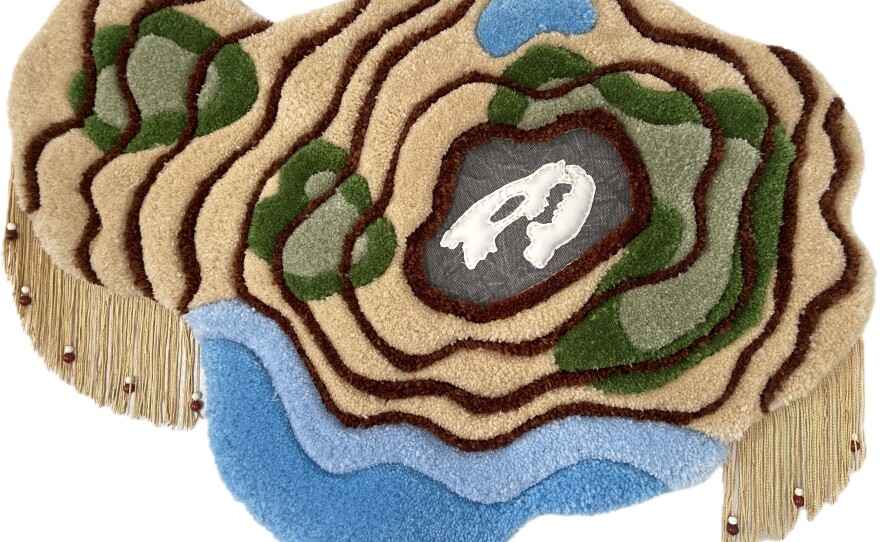
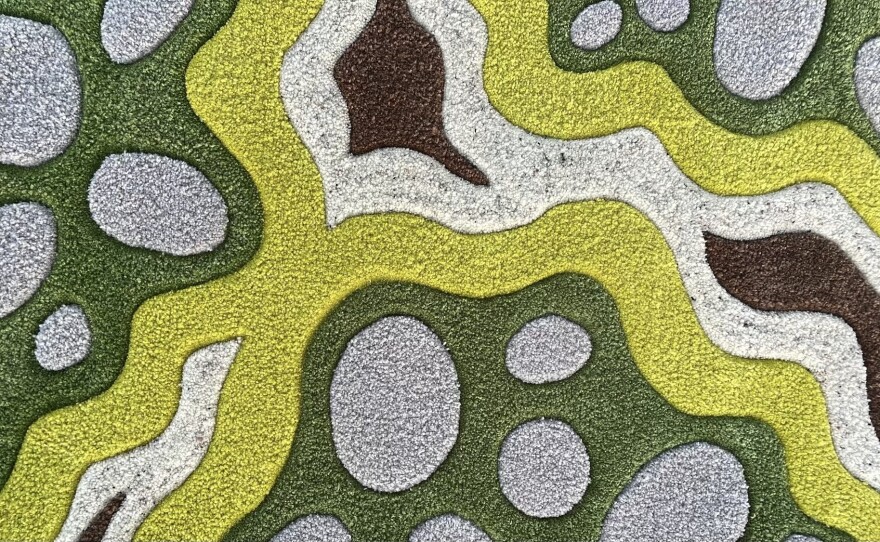
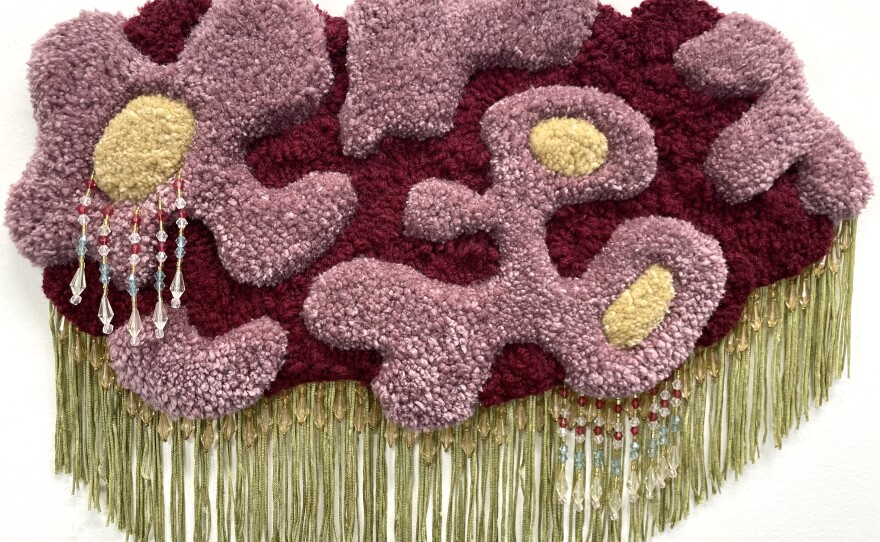
JULIA ANDREAS: I primarily work with rugs and rug tufting, but I've actually recently gotten into Victorian lampshades, so I've kind of started to incorporate pieces like fringe and beading, so they're slowly developing from rugs to become even more sculptural. I really love rug tufting because it's so tactile.
KUNM: So, it's like a multi-media kind of approach to your art... I mean, I've seen some of these rugs and when people think of "rugs" they're something that people step on, but these are so much more elaborate, right? Can you kind of paint a picture of what they kind of look like?
ANDREAS: Yeah, I've always loved color, so a lot of my work is super vibrant. Just the kind of basic rundown of how you rug tuft – you will initially start with a large wooden frame, and the floor tacking strips that you use for carpet, you put alongside the edges of the frame, stretch this canvas over it.
The canvas is what it would basically be for a painting canvas, but without Gesso, so it's this super flexible cloth. For those of you who are familiar with the punch needle, this is kind of its modern form, where now it's like electric; you aren't having to do it by hand.
KUNM: Oh yeah, that would suck...
ANDREAS: Oh yeah, oh yeah. That's originally when I kind of started, I was talking with this older group of women, and they were telling me about how their grandmothers used to do punch needle. And so they were blown away that I was able to make these large rugs. And then I had to tell them – oh, actually, it's, it's mechanized. This is a tufting gun. And they were like, oh, my God. I thought you were, like, dedicating your life to doing this!
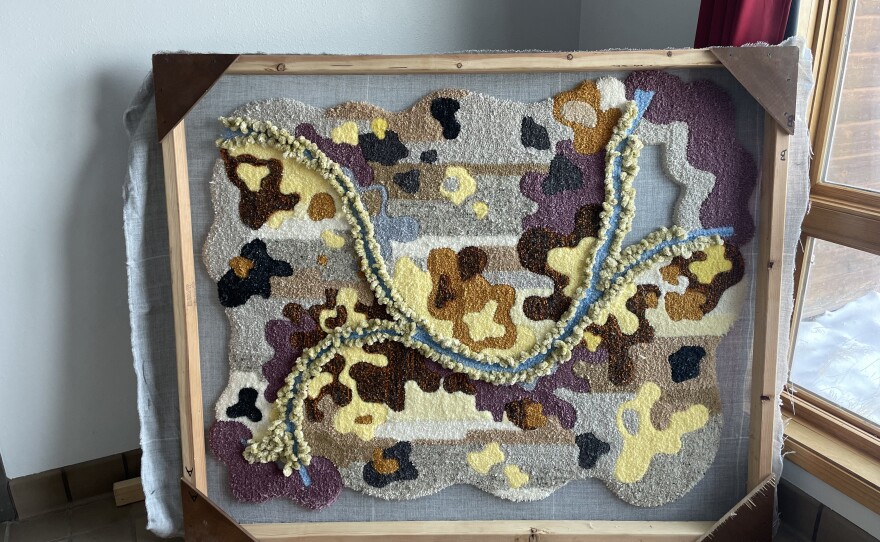
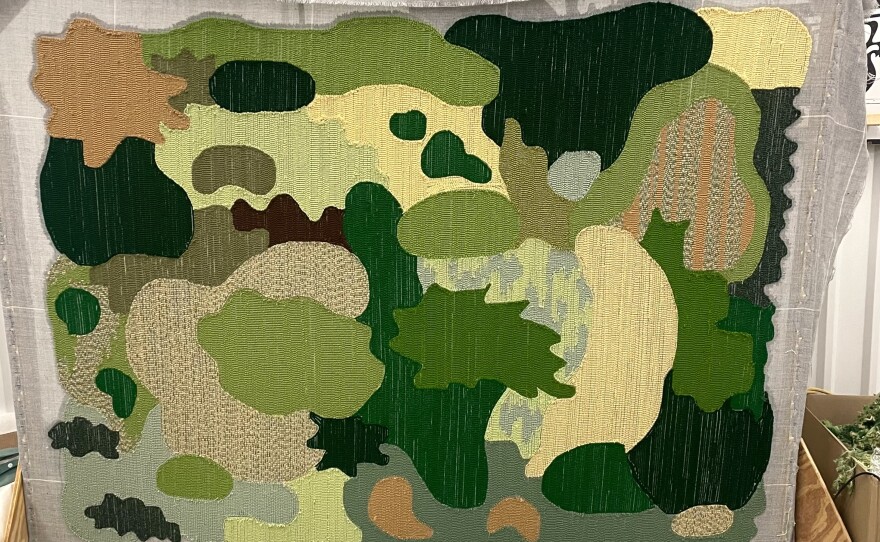
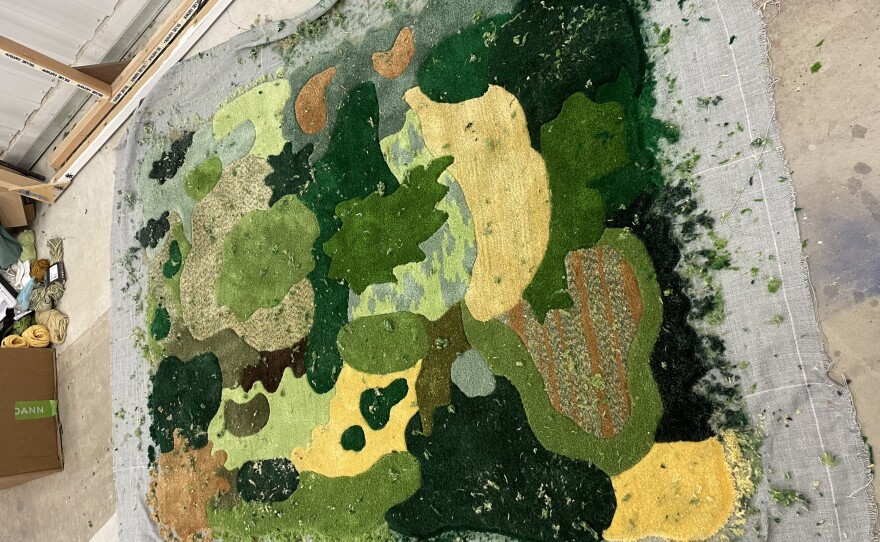
KUNM: So, you scored this artist residency at the Valles Caldera. You were one of five people picked, but you were the only person from New Mexico. I gotta ask, what's so attractive about it to you, especially as a New Mexico native?
JULIA ANDREAS: Yeah. So I think I grew up going to the Caldera. My family, we had a cabin in the Jemez, and so as a kid, I was so familiar with New Mexico, kind of being like dry and desert, as I think a lot of New Mexicans are. And so I think anybody's experience when you go to the caldera is it just feels so otherworldly. You have this massive crater just filled with grass and different verdant plants that you just don't see in the majority of New Mexico. So I think for me, it always held this kind of like sacred feeling, and it just had this magnetism to it that I've always been interested in.
KUNM: What are you most excited to accomplish there?
ANDREAS: To be honest, one of the reasons that I love applying for residencies with the National Park Service is because I think a lot of these places are so special, and it's rare to be able to spend so much consecutive time there.
One of the best gifts about this residency is that I'm going to be able to live and experience life in the preserve for an extended period of time. So, kind of building that intimacy and familiarity with a place that I've kind of come and gone between throughout my life is probably the greatest draw for me.
KUNM: And you're going to be out there for two weeks?
ANDREAS: Yes.
KUNM: Okay, so I know this is maybe a little forward thinking – but how do you think the caldera with its, you know, amazing light, space, and even history – how do you think that's going to inform your work when you get there?
ANDREAS: Great question. So the caldera has almost like a mosaiced topography, where you have different conifer forests, ponderosa pine forests, you have large meadowscapes… Seeing those textures come together will definitely influence my work.
But I think largely I am kind of going in with open expectations to see how it shapes and influences. I think I'll be surprised, because I'm typically not really influenced by fauna, like different animals being there. I know it'll largely be like elk season, so getting to hear those bugles. I'm just open to see how I'm influenced as well by just the sounds of the place.
KUNM: Yeah, you might see, like, hundreds of elk out there in the meadow in the middle of the morning. I mean, I've seen that in person. It's amazing. It's a top 10 experience in my life. So it sounds like you don't have a plan, though? You're not coming in with any expectations. It's like, I'm gonna just vibe it out when I get there?
ANDREAS: Yeah, that's why you're doing it. You know, what can this place show me? How can I be influenced?
Artist Julia Andreas will spend her artist residency at the Valles Caldera in the first two weeks of October – where she will spearhead at least one public program. Artists are also expected to donate one piece of artwork created during their time at a National Park.
You can find more details about her artwork at her personal website.