
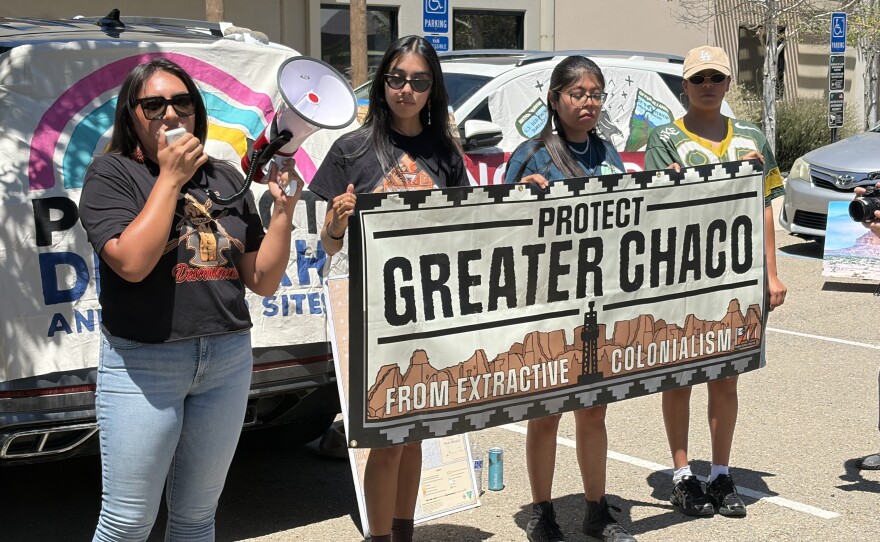
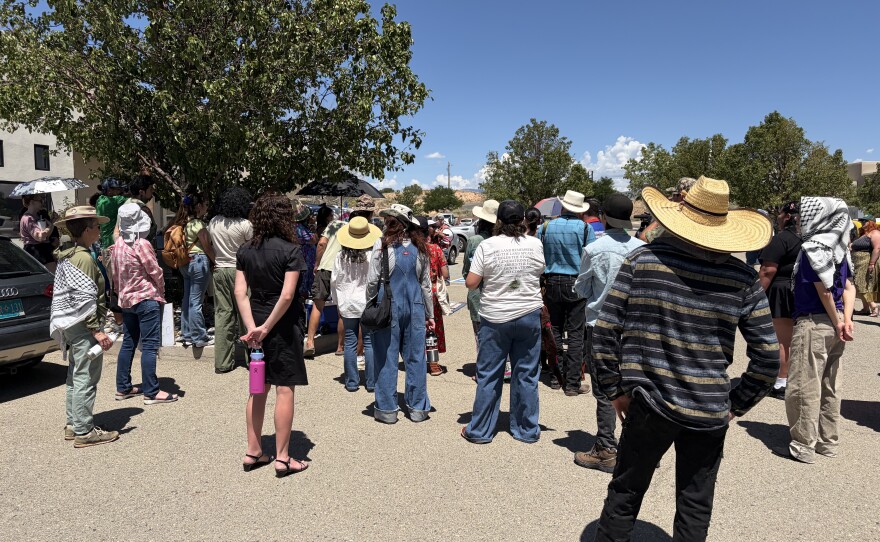
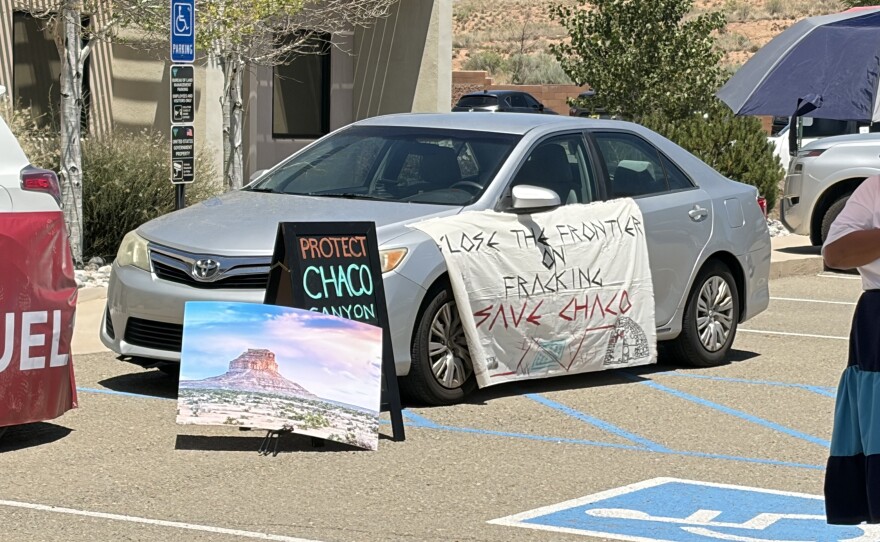
Protestors gathered outside the U.S. Bureau of Land Management in Santa Fe on Wednesday on the last day for public comment on the federal agency’s proposal to remove or shrink a 10-mile buffer zone around Chaco Canyon for oil and gas drilling.
On a sweltering hot afternoon, over 100 advocates stood outside the BLM office to voice their disapproval of a recently released environmental assessment that suggests eliminating the buffer around Chaco Culture National Historical Park. The Biden Administration put in place a 10-mile zone around the park prohibiting oil and gas production. The BLM only allowed 14 days for public comment on the assessment.
The UNESCO world heritage site located in northwestern New Mexico is centered on the one of the largest, most well preserved and architecturally sophisticated ancient ruins in North America. The area includes 4,200 documented archaeological sites, including ancient roads, shrines, and multi-story structures dating back some 3,000 years.
The Navajo Nation council including President Buu Nygren supports the proposal to remove the buffer, citing royalty payments and infrastructure from oil and gas; but not all Diné members agree.
Cheyenne Antonio is a Diné organizer and said at the protest that Navajo leaders did not consult with any of the Chapter Houses near the Chaco cultural sites and have not given tribal members enough time to comment.
“Especially given that many community members face barriers in providing input from difficulty accessing internet, travel, and language translation without meaningful consultation with impacted Navajo chapters, pueblos, and tribes and allotment shareholders. BLM should not move forward with revoking Public Land Order 7923,” she said.
Jonathan Juarez is from the Pueblo of Laguna, whose members trace their ancestors to Chaco. He said his father experienced the pollution from the giant open pit Jackpile uranium mine on the pueblo, and he doesn’t want to see Chaco damaged.
“I remember the stories of abandoned mine shafts and abandoned equipment, and you know the stories that we would tell to keep our children away, to let them know that these things are dangerous,” he said.
As a result his grandfather chose to relocate to Albuquerque to protect his family.
Juarez urged the public to file comments.
“Join Pueblo people, join Diné people in this moment of solidarity, not just with each other, but with everyone in the country, to show that we are not going to stand idly by as these sacred sites are threatened,” he said.
New Mexico’s congressional delegation and many state lawmakers also spoke out against the BLM process.
Support for this coverage comes from the Thornburg Foundation.


