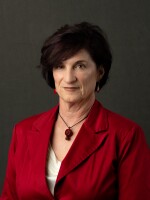
KUNM said goodbye last week to our longtime reporter, Taylor Velazquez. Taylor first came to KUNM as a student reporter, and since 2021, she has been with us fulltime as part of our public health reporting project funded by the W.K. Kellogg Foundation. She has focused on educational equity, child wellbeing, and health care access. KUNM News Director Megan Kamerick sat down for an exit interview with Taylor, who is heading to law school at the University of New Mexico.
TAYLOR VELAZQUEZ: Well, starting at KUNM, I was an intern back in the summer of 2019, and it was a whole new world. I never thought I would be in broadcast. My goal was to be in print, but those first couple months, I was like, "This is a whole new world!” and kind of fell in love with it.
KUNM: Why did you fall in love with audio?
VELAZQUEZ: You can just tell a story, and it just feels much realer than when you're reading it. You can hear the emotion in people's voices. You can hear the sounds in that scene, and it just puts you in a different place.
KUNM: That was 2019, but then you were with us -- I was a host at the time -- and then we went into the pandemic.
VELAZQUEZ: Goodness, yeah.
KUNM: What was that like reporting in the pandemic?
VELAZQUEZ: That was a wild time. I feel like that's when I became a real reporter. I don't think the student title worked anymore, but I worked with at the time Marisa DeMarco and Khalil [Ekulona] on [the podcast] “No More Normal.” So we did a podcast almost every day, I think, at one point, and then we just talked about everything that was going on during the pandemic, from the actual COVID-19 infection to the protests around George Floyd's murder, everything that had just happened. It was just one thing after another. But we did it. We got through it, and I think we're all hopefully better reporters for it.
KUNM: That was an insane year.
VELAZQUEZ: Yeah, wild.
KUNM: What on earth kept you in journalism after that?
VELAZQUEZ: I just think, especially during that time and being a reporter during COVID, it just really instilled in me that there's so many stories to tell. I think that time -- it highlighted a lot of the inequities and the gaps that we have in society that we don't necessarily even want to deal with sometimes or think of, so I just wanted to commit to reporting on those gaps.
KUNM: You went to KSFR for a while after you graduated in Santa Fe, and then we hired you back here. What were some of your most memorable stories?
VELAZQUEZ: Well, I did cover a lot of the Children, Youth, and Families Department, so that did take up a lot of my headspace and capacity, but I just think covering the Kevin S. settlement particularly was probably the most memorable. I think hearing the stories of the kids in foster care and just making it such an experience, because we don't think about what they go through. We know it's horrible, but hearing from them and what they're going through on the day to day, especially through their lawyers who are telling me, you know, “I went to visit one of my kids and he's in a building with no windows. It's boarded up by wood and there's a mattress laying on the floor. “Like it just makes it more real for me.
KUNM: What are you most proud of in your time here?
VELAZQUEZ: Oh, there's a lot. I think just exploring the public health beat, that's one thing I've been so grateful for. Being able to really explore what's going on in the world, and like I said, those gaps that exist, and really figuring out well, why are there gaps in education? Why are we ranked so low in child well-being? And really getting to hear from so many different advocates and organizations, and even students or foster kids, about what they think should change and what they would like to see in their education system or child welfare system, really changed a lot for me in my perspective.
KUNM: Why did you decide you wanted to go to law school?
VELAZQUEZ: It’s always been the goal. You know, I thought I would do journalism for a couple years, really hone my skills in writing, hone my skills in just public interest, and now I feel like I can take all those skills and apply that to law school.
KUNM: What do you want to do as a lawyer? Do you know yet?
VELAZQUEZ: I don't know yet. I thought I had an idea, but I think as undergrad, I'm just going to go in blind, kind of take my classes one by one and really dive deep into each class and see what my interests are.
KUNM: Any plans to return to journalism?
VELAZQUEZ: You know, maybe. I think all the skills, journalism, law school. I think they'll translate well to each other. So maybe. Stay tuned.
KUNM: Well, Taylor, we're going to miss you.
VELAZQUEZ: I'm going to miss here. I mean, I've learned so much, and it's been one of the greatest things I've done in my career so far.
KUNM: Well, thank you for being with us for so long, and good luck.
VELAZQUEZ: Thank you for I'm going to need it.