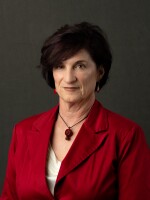
Like many New Mexicans, Juliana Rubio Slager grew up with the ghostly tale of the woman who drowns her children and herself in a river. But her ballet, “La Llorona,” offers a new interpretation informed by her own experiences as a mother. She is the founder of Ballet 5:8 in Chicago and she spoke with KUNM's Jeanette Didios.
JULIANA RUBIO SLAGER: I remember my abuela saying, "You know, go to bed, or La Llorona is gonna get you,” when I was really small. But I think as I got older, the story started to hit me very differently. Because when you look into the background of how did this legend come about, it's actually about a mother named Maria in the traditional myth. She goes crazy, or so the legend goes, because her husband's cheating on her, and then she drowns her kids in the river and drowns herself. And I started to think, you know, it's interesting how in a lot of folklore and different tales, how women are kind of always painted as being either hypersexualized or just like witches or crazy people. And so I started thinking about my own experiences as a mom and suffering through postpartum depression with my second child, and I started to just kind of put the pieces together of like, what if this woman was not crazy? What if she's just really struggling, and she's going through one of these difficult seasons and doesn't know what's happening and doesn't know how to cope? And so I wanted to write a version of it that would bring in that mental health aspect and really show Maria as a good mom who loves her kids, but is struggling and needs help.
KUNM: Can you tell me the processes that as well, like writing? Did you have any challenges with it?
SLAGER: I actually set the story shortly after the Mexican-American War because that was such a pivotal moment for a lot of us who are Chicanos or Chicanas. Part of my family's been in New Mexico since before we can remember, and they always say, "We didn't cross the border, you know, the border crossed us.” And so I think that period of history was very tumultuous for a lot of people trying to figure out their identity and the land literally shifting ownership under their feet, and so it just felt like the right era to set this in. And so I started working from there, and just created a story for Maria, tried to get in her head what would her life have been like. Of course, in that era, they didn't have a lot of mental health or you know ways to alleviate that suffering. And so I started to do research on what that could look like, and as you know, there was like a lot of lore about evil spirits and different things, but they didn't really understand mental health. And ultimately, I hope what it does is it shows a compassionate view of Maria. And in my story, she doesn't end up killing her kids. She thinks she does. She has a dream. And she is really helped out of her depression by the relationship with her sister, and that's the main point of the story: is that the love of your family and the love of your community is what can help you in those dark moments. And I know that's true for me, and I know it resonates for a lot of us.
KUNM: I'm Native American too, so we definitely have lore that aren't particularly nice to women as well. So, how can we transform these lores that we were taught as kids and make it more impactful, make it more helpful to our communities?
SLAGER: Sometimes when men tell stories, they really flatten what women experience, and so I think it's important that we intentionally go back in and rewrite those stories and those lures. And it's this fine balance of respecting tradition and respecting our roots and our ancestors, but then also saying, you know, maybe we could interpret this in a different way that makes more sense and gives these women a real backstory that makes more sense for the kind of strong women that I've experienced and I'm sure you've experienced, in our family ancestry, they're real, full-rounded people, and I think honoring that allows us to honor ourselves and to kind of step forward in the fullness of who we are.
Juliana Rubio Slager brings her ballet, “La Llorona,” to the National Hispanic Cultural Center on Sunday at 3 p.m. Find out more here.