
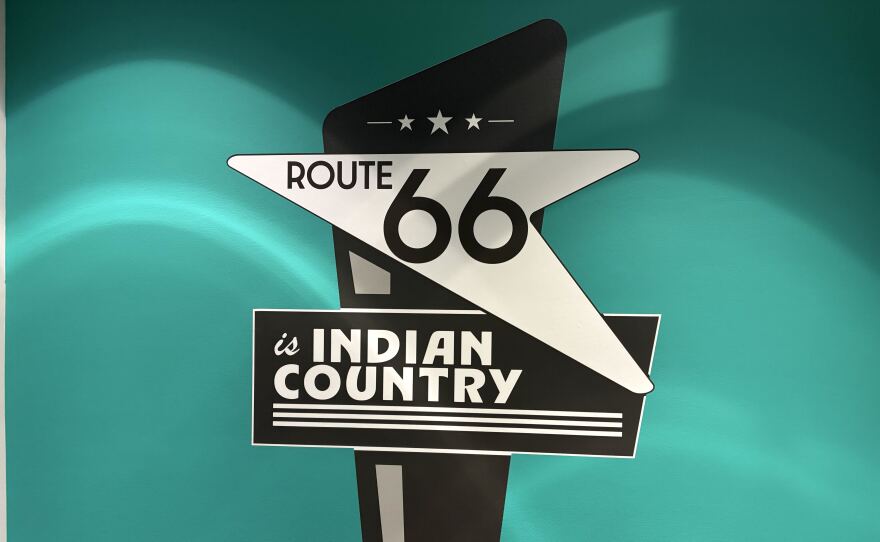
Route 66 is celebrating its 100th anniversary this year and an exhibit in Santa Fe highlights how the Mother Road both exploited Indigenous cultures, and created opportunities for Native American artists. Executive Director for the Museum of Indian Arts and Culture (MIAC) Danyelle Means (Oglala Lakota) spoke with KUNM about the show “Route 66 is Indian Country.”
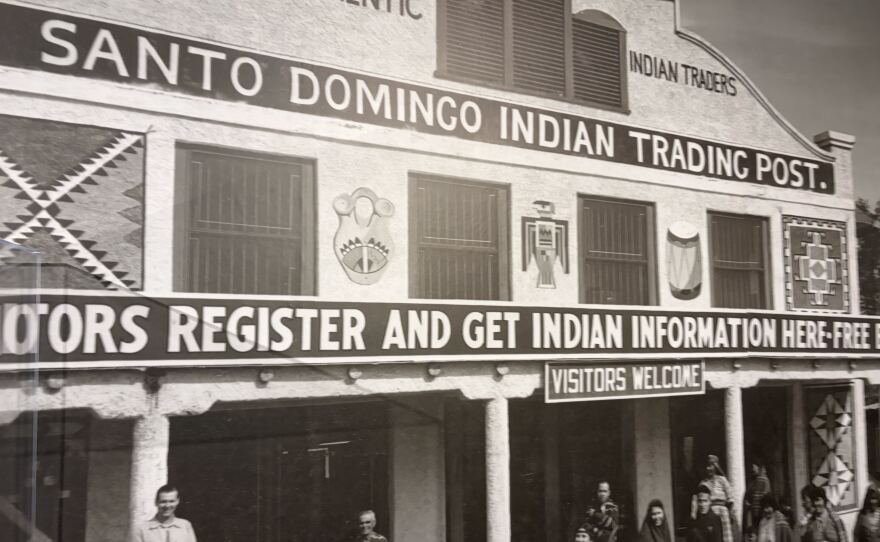
DANYELLE MEANS: For much of the New Mexico miles, you're crossing several different Native Nations here in New Mexico, and that was an opportunity for a lot of folks. But museums are very extractive industries, especially for Indigenous people, and one of the ways that we collected was through the trading post dealers, and so it's the benefit and the extractive aspects of the of the route really are something that that I want people to walk away with understanding that that was also Native people's introduction to capitalism, to being their own representative on the route, selling their wares, if that was on the side of the road, or working with dealers in the trading posts.
KUNM: When you were beginning the exhibit and the process of collecting items, what was the intention, and what were you looking for in terms of items?
MEANS: Well, we did an exhibition at the 75th anniversary of the Route 66, and that we focused more on the kitsch, and so there was a display of the salt and pepper shakers that you would be able to get from the tourist shops or the or the trading posts, and so you see examples of that in our exhibit. You also see examples of Non-Native made items that we do have in our collection. We have a few of those really collected as an opportunity for us to talk about cultural appropriation, an opportunity for us to talk about how control over Indigenous identity is something that we've been struggling with for decades.
KUNM: How important was it to have an exhibit about Route 66, but with the perspective of Native Americans?
MEANS: That is what we do here. I mean, I think that's really the specialty of what the Museum of Indian Arts and Culture has done for peoples of the Southwest over the last – I say, you know, 1987 was when we were officially established – what we strive for is to tell the stories from the indigenous perspective. And that's from the people: Santa Clara, Isleta, all of the Pueblos here, all of the Apache Nations, Navajo Nation. We have a collection of tribes that have been here for millennia, and that is really important that their voices are the ones telling these stories.
KUNM: Can you describe some of the pieces that are in the exhibit? Maybe your favorite or one that really stands out to you?
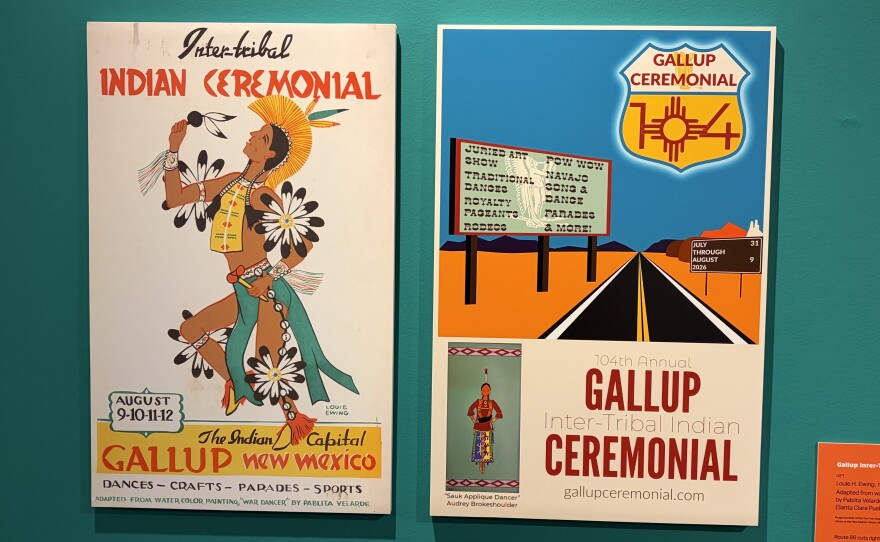
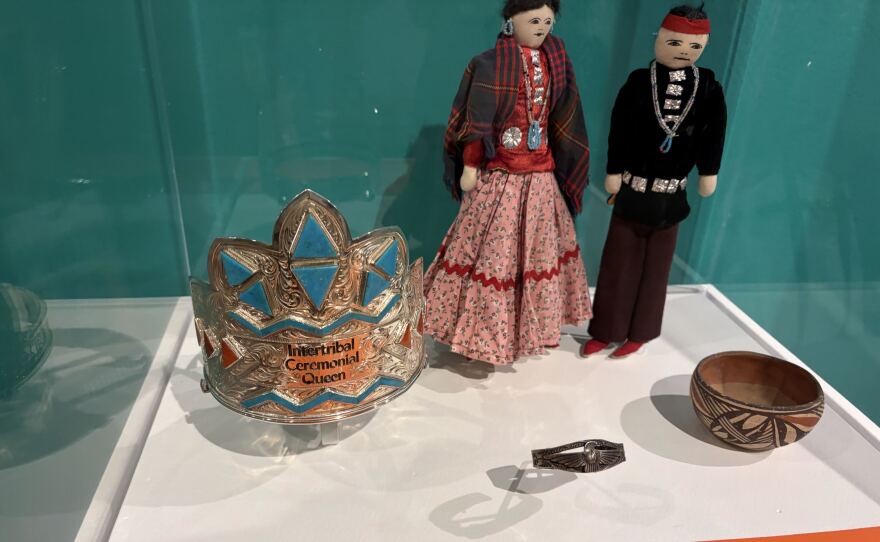
MEANS: We were loaned a piece from the tourism department, New Mexico tourism department, and that piece is a crown from the Gallup Intertribal Ceremonial crown, and that piece for me really talks about the powwow circuit. But Gathering of Nations, Denver March, you start to see where the powwow circuit starts to really grow from this area and for me that talks about a whole other aspect of Native people coming and being on Route 66 to really be able to interact in a way as powwow culture really grew up. So Route 66 was a real important aspect of that as well.
KUNM: And I think it's really interesting too because it did start as a powwow, but it's so much bigger than that.
MEANS: So much bigger than that. There are athletic games, there's a rodeo, exactly, and that's so important to be a part of that, and it's a way of inviting non-Natives into powwow culture, much like the Pueblos here in their feast days. This route really did bring people out here, and whether it was in the 30s, the 40s, the 50s, you had so much traffic really coming through this area and getting exposed. You know this has such a storied past that celebrating it was really something that we should definitely be participating in.
KUNM: What do you hope attendees take away from it?
MEANS: Wherever you are in the United States, you're in Indian country, and that we've been here for many, many millennia, and we're still here, and we're still innovating, and that's why you know we have the Route 66 exhibit, but we also have our contemporary gallery, we have our permanent gallery, which is Here, Now and Always, and that title really is what I hope people walk away with: is that we're here now, and we've always been here, and that is really, really an important reminder for folks that Native culture isn't solely in the past.
Support for this coverage comes from Thornburg Foundation.


