Among the many races New Mexico voters will decide in the November 3rd election is state land commissioner, one of the most important, and surprisingly low-profile positions in the government.
The head of the State Land Office oversees 9 million surface acres and 13 million mineral acres of land granted by the federal government to generate revenue for public schools, universities, hospitals, and other vital public institutions.
Because of the ongoing war in Iran and subsequent on-and-off closures of the Strait of Hormuz, New Mexico is enjoying a boom of oil and gas revenue from domestic production on state trust land. Although, as the nation’s second-highest producer of fossil fuels, the state has long relied on these revenues to fill its coffers.
Current commissioner Stephanie Garcia Richard will be legally termed out of office at the end of the year. The Democrat is now running for lieutenant governor alongside gubernatorial frontrunner Deb Haaland.
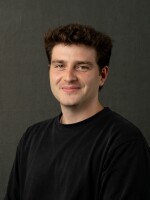
Running on the Republican land commissioner ticket to replace Garcia Richard is Michael Perry, who spent time as an assistant commissioner of state lands at the New Mexico State Land Office and now serves as a Chaves County Commissioner based in Roswell.
On the Democratic side is Juan de Jesus Sanchez III, a self-described farmer and conservationist, who once served as a political director for U.S. Sen. Martin Heinrich (D-N.M.) and a natural resources specialist/ranger with the U.S. Army Corps of Engineers.
KUNM invited both candidates to our studios to ask them listener questions and about their vision for the office, if elected.
*These conversations have been edited for brevity and clarity.
Michael Perry
KUNM: We fielded questions from our listeners and they want to know if you think climate change is real? And, if so, how would it affect your decision-making as land commissioner?
PERRY: Well, anybody who doesn't think climate change is real probably needs to go back and look at the science. Because for one, climates change four times a year, automatically. So climate change is real, and I always give this example: things change over time, the only thing that remains constant is change.
KUNM: What about human-caused climate change, with emissions, methane?
PERRY: Are you asking if I believe in it?
KUNM: Yes.
PERRY: I believe that the climate change is affected by a lot of things, and I believe humans, obviously we're a lot of people on this old world, and I think we are contributing to the climate change. So yes. I look at how can we better the scenario, how can we better the system, how can we get more water down the river, how can we possibly look at desalinization projects on state land? Can we look at reclaiming and produced water in the oil field? We have these resources that we're using. Some of them are creating a bunch of litter – can we take that litter, make a business model out of it, and create something beautiful like clean water?
KUNM: Okay. Well, on the topic of public lands, concerns definitely have been brewing across the electorate about the Trump administration specifically and their attitude towards public land itself. If the time came, how would you push back on the feds to protect state resources? We’re seeing annexation of land at the U.S./Mexico border, for example. How would you push back?
PERRY: Well, I've already pushed back. I've already pushed back as a county commissioner because the federal government – the Department of Energy under the Biden administration – created what's called a National Interest Electric Transmission Corridor. They call it NIETC and basically, they said they're going to come down the eastern side of the state and create this transmission corridor from Colorado, Kansas, wherever.
They didn't negotiate with landowners. They didn't negotiate with the State Land Office. The State Land Office was actually against it. I'm against it as a county commissioner because the federal government used the word eminent domain – either you're going to do this, or we're going to take it. Now, the logical step would be for us to go visit with our three representatives and our two senators that are in Washington, and I can tell you we personally visited with them, and they said, “Nope, we're going to do this anyway.” So, I've already stood up for that.
KUNM: Ignoring partisan lines here, let's say the Trump administration comes in, wants to do something similar, you would step up and protect state resources?
PERRY: Absolutely. It has nothing to do with politics. It has everything to do with the land. And let me finish on that national interest corridor. So I don't care who it is. I don't care if it's the governor, the president, the Senate body in Washington. If it's not good for the landscape and the people on state land, they're going to have a serious issue with me.
KUNM: We're seeing a surge in oil and gas revenue right now from the ongoing war with Iran. Though legislative analysts have said our oil and gas production will peak around 2030 and then slowly decline in the decades after. I wanted to ask how we should diversify that income as we're seeing the writing on the wall. We have so much money to spend right now that won't be the case in 50 years.
PERRY: That's a good question. It's a fair question because we haven't prepared yet, financially. And when I say financially, you're automatically going to say, “Well, we put in all the green renewable energy.” You don't get any money for that. When you talk about oil and gas and you talk about green energy, they're two different sides of the spectrum. When I look at that and I think we have a 3% royalty rate on one, we have a 25% royalty rate on the other, one of them is bringing us $2.5 billion, and while we're advocating for all the use of this wind and solar farms, we're not putting our money where our mouth is and saying we're replacing oil and gas. And I will tell you right now, if you think you're going to replace the revenues from oil and gas to another, you're smoking the green stuff, buddy. It's not going to happen. You cannot replace $2.5 billion a year.
But, what I can tell you is we could have had more in this state from oil and gas. The reason is we have to get a little more of a pragmatic and reasonable approach on some of our policies. Our policies have been against oil and gas in this state. There is more oil exploration and extraction on federal land now than state land.
So, if you're a businessman and you look at it from a business model, do you want to pay 25% royalty over here, or do you want to pay 12% royalty over here? Do you want your paperwork to be slow-dragged at the State Land Office, or do you want it to get done relatively quicker at the BLM [Bureau of Land Management]?
***
Juan de Jesus Sanchez III
KUNM: Let's start with data centers. The current land commissioner, Stephanie Garcia Richard, has twice denied requests to build a natural gas pipeline through state land for Project Jupiter. In your view, what role should data centers play in economic development going forward — especially given how unpopular they are with the American public?
SANCHEZ: My stance is that we need to be putting in strong guardrails around data centers here in the state of New Mexico. For me to even consider a data center on state trust land – which is really not high on the priorities or anything of that nature – there are a lot of different guardrails that I have to reach, which is including half, at least 50% renewable energy from the outset, project labor agreements. But the most important thing is addressing our water and addressing our community input.
One of the many big problems we're seeing with, down at Project Jupiter, is there was community input, but it was after all the decisions were made. That's not the way that government should be working. We need to be in communities, talking to communities, the people that are going to be affected before anything is even considered. So, I have six different levels of guardrails before I'd even consider. The things that are really important to me is making sure we have our clean air. We're not using any water that we'd be using for drinking or for agriculture, and the community needs to have a huge say in that. And we need to make sure that if there are jobs associated, they need to go to workers in New Mexico.
One of the biggest problems we're seeing with Project Jupiter is that there was community input, but it came after all the decisions had already been made. That's not the way government should work. We need to be in communities, talking with the people who are going to be affected, before anything is even considered.
I have six levels of guardrails before I'd even consider [a project]. The things that are really important to me are making sure we have clean air, that we're not using any water that we would be using for drinking or agriculture, and that the community has a real say. And we need to make sure if there are jobs associated [with a project], they need to go to workers in New Mexico.
KUNM: Right now, New Mexico is seeing a lot of oil and gas revenue simply because of the ongoing war with Iran. Legislative analysts have said for the last couple of years that our production will peak around 2030 and then slowly decline in the coming decades. I wanted to ask how you think we should diversify our revenue streams, since renewables don't bring in as much money as the fossil fuel industry. What do you think we should do?
SANCHEZ: First and foremost, the thing that we need to be thinking about with our land is whoever's going to be on it, using it, needs to be taking care of it. One of the things the current land commissioner is putting in place is a new bonding rule for oil and gas, to ensure we're not having to worry about orphan wells, cleanup, all these different kinds of things if a business goes bankrupt — then the taxpayers are held with that. So what we're trying to do is put in place these guardrails and these parameters to ensure that oil and gas is being held accountable, and they are going to be ensuring they are taking care of the cleanup if there’s any spills if there’s leaving of orphan or abandoned wells. Oil and gas isn't going anywhere, and it generates a huge amount of money. So what we need to do is make sure the same way I feel about someone who’s going to be hiking on the land, or camping on the land, or hunting or birdwatching, it’s a very basic premise of you take care of it after you're on it — and we need to hold oil and gas. The way we diversify, I think renewable energy is a huge part of that opportunity.
KUNM: During the primary election, a super PAC called the American Energy Action Fund purchased mailers and text message campaigns in support of your nomination. It's currently facing a state ethics complaint over allegedly failing to disclose spending details. Do you agree with that complaint?
SANCHEZ: Yeah, absolutely. I don't know who these folks are. I still to this day don't know who they are, why they got involved. Whatever they did, it was more problematic for my campaign because of all the things that they were doing wrong. So, I totally support the ethics. Our campaign is not able to coordinate with these folks and we have no idea, we have literally no idea who they are. All I know is that they caused more harm than they did any good for me.
Absolutely, they should be following the rules, they should be following the laws, and if there are loopholes that are happening that allow them to do what they're doing, then I'd be happy to work with legislators to make sure those loopholes get get closed, because this is not one of those things where you get to choose who who ends up getting behind you, and I was very discouraged to see this coming out because you have no control over it aside to say that I don't agree with what they were doing and I still don't agree with what they're doing and think they should go through the process of of making sure that, you know, we need to go through that ethics complaint and make sure that they get held accountable for whatever they did.
KUNM: So taking a step back here, what about the State Land Office would you like to see change, just overall, broad, institutional or structural change?
SANCHEZ: Yeah, so one of the big things that I really care about is trying to decentralize the office. A vast majority of the people who work for the land office are out of Santa Fe. Santa Fe is a great place, but Santa Fe is not representative of the rest of the state. I live in Valencia County, I grew up around my family's ranch in Socorro County. I've traveled the state a ton, and let me tell you, whenever you're in these different communities, it's really hard to understand what's going on if you're not in the community constantly.
So we need to be doing a lot better of hiring more outside of Santa Fe, building more offices outside of Santa Fe, and hiring local people who understand the land and understand the issues, rather than calling in and making a decision from a desk in Santa Fe looking at lines on a map or dollars on a spreadsheet. That's not the way that things should operate. I know they have increased the amount of staff that are outside of Santa Fe, but I would like to increase that even more so that it's more representative.
***
Voting information
October 6: Early voting begins at County Clerk offices
October 17: Expanded early voting begins
October 20: Deadline to request a mail-in ballot
October 31: Last day of early voting
November 3: Election Day
Find a sample ballot, voting locations and more here.